
QR Code Tool Tracking: The Smart Way to Manage Small Tools on Site

QR code tool tracking is quickly becoming one of the most effective ways for construction companies to manage their small tools and equipment. On busy job sites, tools are constantly moved, shared, and misplaced, making it difficult to keep accurate records.
In fact, equipment loss and poor asset tracking cost the construction industry billions every year. A report from the National Equipment Register estimates that equipment theft alone costs up to $1 billion annually in North America.
In this article, we’ll explore how QR code tool tracking works, why it’s replacing traditional tracking methods, and how it helps construction teams improve safety, accountability, and compliance.
What Is QR Code Tool Tracking?
QR code tool tracking is a digital asset management method that uses scannable QR codes to identify and monitor tools, equipment, and other assets on site.
Each tool is assigned a unique QR code label. Workers can scan the code using a mobile device to access information about the tool.
This typically includes:
-
Inspection history
-
Maintenance records
-
Asset ownership
-
Defect reports
-
Location or project assignment
By connecting tools to a digital system, companies gain real-time visibility into the condition and usage of their equipment.
How QR codes work on construction sites
QR codes are simple but powerful. Once attached to a tool, they allow workers to instantly access digital records.
The typical process works like this:
-
A unique QR code is assigned to each tool or asset
-
The code is attached to the equipment
-
Workers scan the code using a mobile inspection app
-
Tool information and inspection checklists appear instantly
This removes the need for paper records or manual asset logs.

Why Construction Companies Are Switching to QR Code Tool Tracking
Many construction companies still rely on spreadsheets or paper systems to manage tools. However, these methods often fail to keep up with the realities of busy construction sites.
QR code tool tracking solves several common problems.
Reduced tool loss and theft
Construction tools are frequently lost or misplaced across different projects.
According to the Chartered Institute of Building, over 20% of construction companies report regular equipment losses each year. Digital tracking systems create a clear record of where tools are used and who last scanned them.
This significantly improves accountability.
Faster inspections and reporting
QR codes allow workers to complete inspections directly from their phones.
Instead of filling out paper forms, workers can:
-
Scan the tool
-
Complete the inspection checklist
-
Report defects instantly
This process reduces paperwork and ensures inspections are completed consistently.
Better compliance documentation
Digital inspection records are stored automatically. This makes it easier to demonstrate compliance during safety audits or regulatory checks.
Having a clear digital trail also improves health and safety accountability across construction projects.
👉 Book a demo today to see how workMule can help your team digitise and streamline your compliance process.
How QR Code Tool Tracking Improves Safety
While QR code systems are often used for asset management, they also play a critical role in improving site safety.
Easy access to inspection records
When workers scan a tool, they can instantly see its inspection history.
This helps them confirm that the tool has been checked recently and is safe to use.
According to the Health and Safety Executive, poorly maintained equipment is a common cause of workplace injuries. [opens in new tab]
Digital inspection records help prevent damaged tools from being used.
Faster defect reporting
Workers can report defects directly through the system.
Instead of waiting to inform a supervisor, they can attach:
-
Photos of the issue
-
Notes describing the defect
-
The date and time of the report
Supervisors receive the information immediately, allowing them to take action quickly.
Improved accountability
Because every scan is recorded, companies know exactly:
-
Who inspected the tool
-
When the inspection occurred
-
Whether defects were reported
This creates a clear chain of responsibility across the site.
How to Implement QR Code Tool Tracking
Adopting QR code tool tracking is simpler than many construction companies expect. With the right system in place, implementation can happen quickly across multiple sites.
1. Tag every tool with a QR code
Start by assigning a unique QR code to each tool or asset. Durable labels designed for construction environments work best.
2. Create digital inspection checklists
Once tools are tagged, digital checklists can be linked to each asset. Workers will see the checklist automatically when they scan the code.
3. Train workers to scan tools before use
Workers should scan tools before using them to complete pre-use inspections.
This simple step ensures inspections are completed consistently.
4. Track defects and maintenance
If a tool fails inspection, workers can report the defect instantly. The system records the issue and alerts supervisors.
Over time, this creates a complete maintenance history for every tool.
A Smarter Way to Track Tools Across Construction Sites
Managing hundreds of tools across multiple projects is difficult without a digital system.
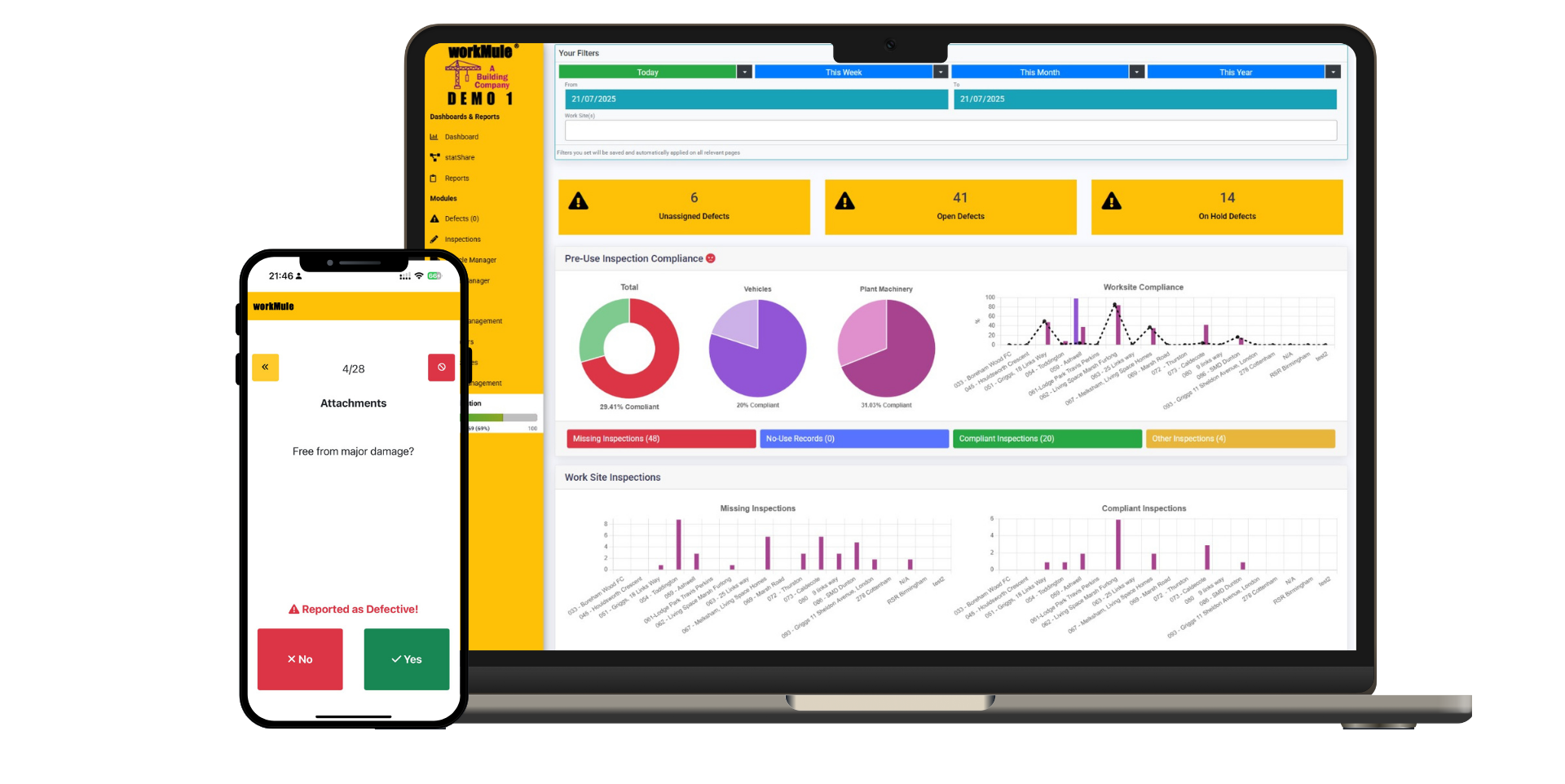
Platforms like Workmule combine QR code tool tracking, inspection management, and defect reporting in one place.
By scanning tools with a mobile device, construction teams can:
-
Complete inspections quickly
-
Track tool condition and usage
-
Report defects instantly
-
Maintain compliance records
This approach removes paperwork and gives managers a clear overview of every asset on site.
QR code tool tracking
Managing small tools across busy construction sites can quickly become chaotic without a proper system in place. Lost tools, missed inspections, and incomplete records all create unnecessary risk.
QR code tool tracking offers a simple but powerful solution. By tagging tools and connecting them to a digital inspection system, construction companies gain better visibility, improve safety, and maintain clear compliance records.
Solutions like Workmule help teams track tools, complete inspections, and report defects from a single platform. For companies looking to improve safety and asset management, QR code tracking is quickly becoming the new standard.
👉 Book a demo today to see how workMule can help your team digitise daily small tools checks and streamline your compliance process.
