
Vehicle Defect Reporting: From Driver’s Phone to Fleet Manager in 30 Seconds

A vehicle defect report is only as good as the speed it travels. On paper, a fault spotted at 6am — a cracked mirror, an air leak, a tyre bulge — sits in a cab defect book until someone keys it in, and the vehicle may have worked three more shifts by then. Digital reporting closes that gap to seconds. This guide covers what a defect report must contain, why paper systems break down, how a fault travels from the driver’s phone to the fleet manager, and the rules on rectification, nil reports and record keeping.
What Must a Vehicle Defect Report Contain?
DVSA’s guidance on daily HGV walkaround checks is specific about what a driver must record when a fault is found:
- the vehicle registration or identification mark
- the date
- details of the defects or symptoms
- the driver’s assessment of the defect — for example, marking it ‘dangerous’
- the driver’s name, and who the defect was reported to
The Guide to Maintaining Roadworthiness (GTMR) — DVSA’s rulebook for operators, last updated April 2025 — adds two more entries before the record is complete: the rectification work carried out, and when it was completed. A vehicle defect report is not a note of a problem; it is a closed loop from discovery to repair.
Reports are not limited to the morning check, either. GTMR requires a written report for defects found during the daily walkaround check, while the vehicle is in use, or on its return to base. Start with our guide to driver walkaround checks.
Where Paper Defect Reports Break Down
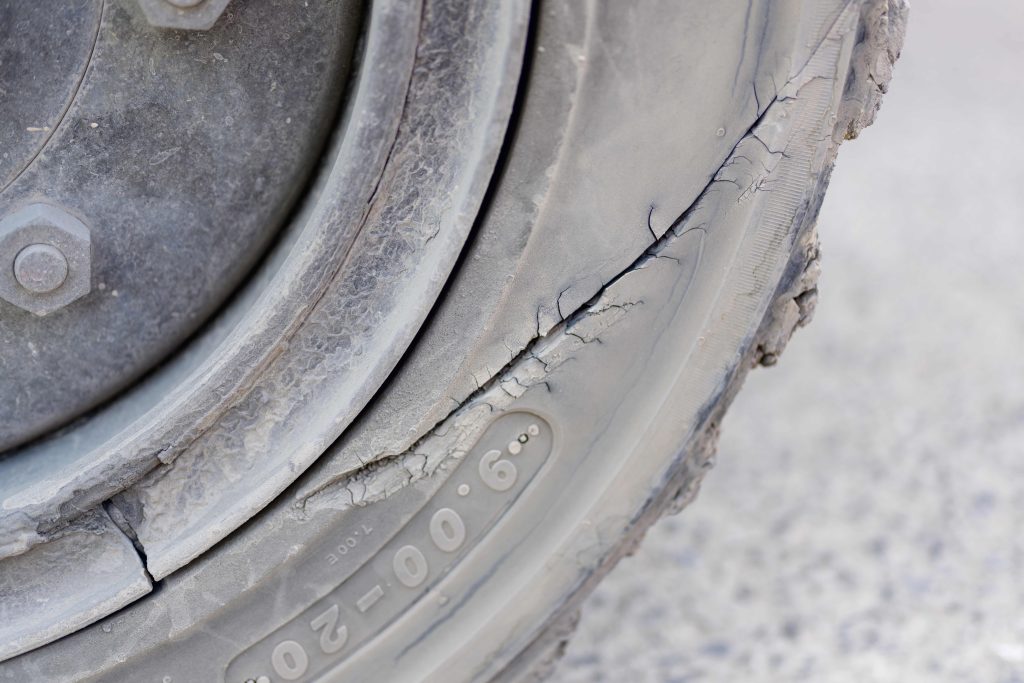
Paper defect books fail quietly. The failure points that surface at audit are predictable:
- The report never leaves the cab. The defect book rides around in the vehicle while the fleet manager works blind back at base.
- The detail dies in translation. “Brakes felt odd” with no photo, no location and no severity is not something a workshop can plan around.
- The trail goes missing. Driver defect reports and rectification records must be kept for at least 15 months, and DVSA can ask for a record of the walkaround check at the roadside.
The stakes are not administrative. Using an HGV in a dangerous condition carries an unlimited fine and a possible prison sentence, and defect paperwork is the first evidence a traffic commissioner reads when judging whether an operator’s systems actually work.
From Driver’s Phone to Fleet Manager in 30 Seconds
The digital version of the same journey is short. The driver finds the fault on the walkaround, photographs it, picks a severity, and submits. The report lands in the transport office timestamped, signed and photo-attached — before the driver has finished the rest of the check. No transcription, no in-tray, no three-day lag.
This is not a workaround; it is what DVSA expects a modern system to look like. The Guide to Maintaining Roadworthiness explicitly accepts electronic records, including checks completed on tablets or smartphones — provided the system is tamper-proof, keeps an audit trail of what was checked and by whom, supports a digital signature, and can produce a hard copy on request.
Worth knowing: a lost defect sheet is an audit finding, not an admin niggle. workMule’s photo-attached defect reporting puts every check, defect report and certificate in one searchable, audit-ready dashboard — so the 15-month trail builds itself.

Rectification, Nil Reports and the 15-Month Rule
Three compliance rules turn a defect report from paperwork into protection:
- Rectify before use. Any defect that makes the vehicle unroadworthy must be fixed before the vehicle is used again — the report stays open until the repair is recorded.
- Nil reports count. DVSA guidance says to record ‘nil’ defects when nothing is found. A nil report is the only evidence the check happened at all, and GTMR recommends operators build nil reporting into the daily routine.
- Keep everything 15 months. Defect reports, rectification records and safety inspection records all carry the same minimum retention period.
These duties sit alongside the check itself — GTMR expects a walkaround at least once every 24 hours the vehicle is in use. For the same record-keeping discipline applied to plant, see our daily forklift inspection checklist.
Frequently Asked Questions
Is a vehicle defect report a legal requirement?
For operator-licensed vehicles, yes. The Guide to Maintaining Roadworthiness requires a written report for any defect found during the daily walkaround check, while the vehicle is in use, or on its return to base — and the records must be kept for at least 15 months. Skipping the report undermines the operator’s licence undertakings.
What is a nil defect report?
A nil defect report records that the daily check was completed and no faults were found. DVSA guidance tells drivers to record ‘nil’ defects, and GTMR recommends operators build nil reporting into their driver defect system — it is the proof the check took place.
How long must vehicle defect reports be kept?
At least 15 months. GTMR applies the same minimum to driver defect reports, the rectification work recorded against them, and safety inspection records. Digital systems typically keep them indefinitely, which makes the retention rule automatic rather than a filing job.
Can vehicle defect reports be electronic?
Yes. GTMR accepts electronic records — including walkaround checks completed on a smartphone or tablet — provided the system is tamper-proof, records what was checked and by whom, supports a digital signature, and can produce a hard copy if DVSA or a traffic commissioner asks for one.
Conclusion
A vehicle defect report has one job: get the fault in front of the person who can fix it, with enough detail to act, and leave a 15-month trail that survives an audit. Paper does that slowly and loses the evidence; a digital flow does it in seconds and files itself.
workMule turns the defect book into a guided check on the driver’s phone — photo-attached defect reports, every record in one audit-ready dashboard. Book a free demo and see how thirty-second defect reporting feels.