MEWP Pre-Use Inspections: What IPAF and LOLER Require
A rigorous MEWP inspection routine is the difference between a safe lift and a serious incident. Falls from height killed 35 workers in Great Britain in 2024/25 — the leading cause of workplace death for the third year running, according to HSE figures.
Yet on many sites, pre-use checks are still a tick-box exercise on a damp sheet of paper. This guide explains exactly what IPAF and LOLER require for mobile elevating work platforms: daily pre-use checks, six-monthly thorough examinations, and the records that prove you did both.
Why MEWP Inspections Matter More Than Ever
Mobile elevating work platforms — scissor lifts, boom lifts and cherry pickers — exist to put people at height safely. When one fails, the consequences are rarely minor. Construction recorded the highest death toll of any UK industry in 2024/25, with over half caused by falls from height. A consistent MEWP inspection regime attacks that risk at its source: it catches the leaking hose, the faulty limit switch or the worn tyre before anyone leaves the ground.
Two legal frameworks apply in the UK — LOLER 1998 (lifting operations) and PUWER 1998 (work equipment). IPAF guidance sits on top as the industry standard for how operators should check machines day to day.
What LOLER Requires: Thorough Examinations Every 6 Months
Because MEWPs lift people, they sit in LOLER’s strictest category. The Lifting Operations and Lifting Equipment Regulations 1998 require a thorough examination at least every six months for equipment used to lift persons — twice as often as general lifting equipment — unless a competent person has drawn up a written examination scheme specifying different intervals.
A thorough examination is a systematic, detailed inspection of the machine and its safety-critical parts, carried out by a competent person who must issue a written report covering the details set out in LOLER Schedule 1. If they find a serious defect, they must tell the dutyholder immediately — and notify the enforcing authority in writing.
Missing or expired examination reports are one of the quickest ways to fail an audit or an HSE site visit.
What IPAF Expects: Pre-Use Checks Before Every Shift
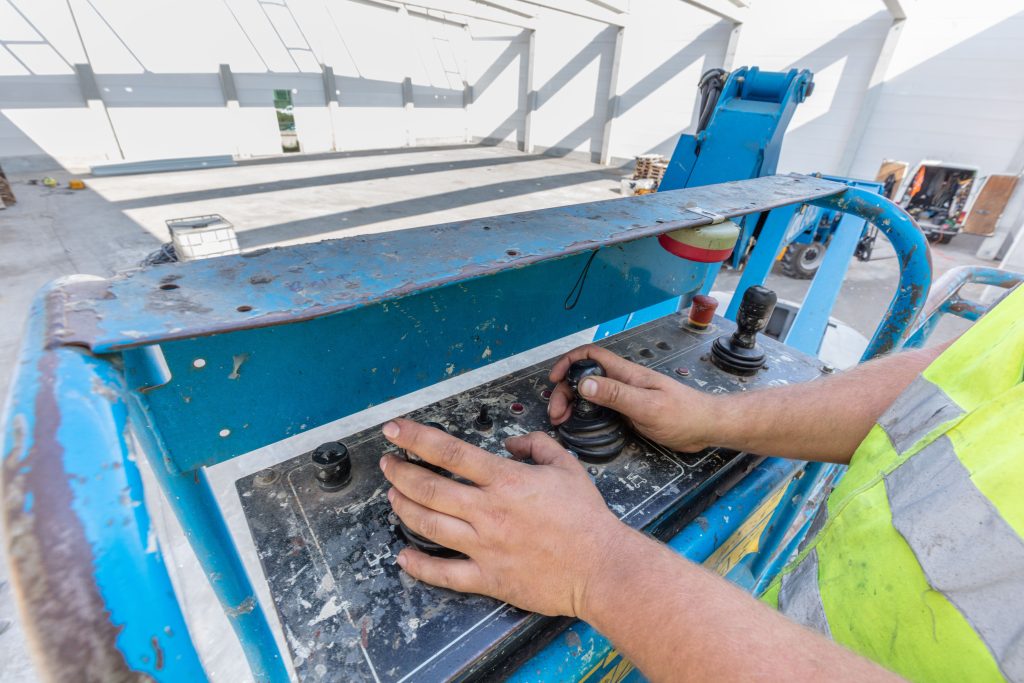
IPAF guidance is clear: a MEWP should be inspected daily, or at the start of each shift, before anyone uses it. Checks should follow the manufacturer’s manual, and operators should record evidence that each check happened. IPAF publishes a free MEWP pre-use inspection checklist covering both parts of the routine.
Visual checks
Walk around the machine before starting it. Typical checklist items include:
- Wheels, tyres and axle locks
- Hydraulics, hoses and visible leaks
- Outriggers, stabilisers and chassis condition
- Boom, scissor pack and platform or cage
- Decals, signage and documentation
Functional checks
With the machine running, test that safety systems actually work:
- Ground and platform controls
- Emergency stop and emergency lowering
- Alarms, limit switches and pothole protection
- Travel, lifting and steering functions
Recording and reporting defects
If a fault affects safe use, IPAF’s position is unambiguous: report it to your employer and the MEWP owner, and take the machine out of service until it’s fixed.
If chasing paper checklists across sites is the bottleneck, see how teams run daily plant checks from a phone — every check time-stamped, every defect logged the moment it’s spotted.
Pre-Use Checks vs Thorough Examinations: Who Does What
The two regimes are complementary, not interchangeable. The pre-use check is done by a trained, familiarised operator every day, takes minutes, and satisfies your PUWER duty to keep work equipment safe and maintained. The LOLER thorough examination is done by an independent competent person — often via your insurer — every six months, and produces a statutory written report.
Passing a thorough examination in January doesn’t excuse a skipped pre-use check in March. HSE inspectors expect to see both trails of evidence — the same standard applied to a LOLER-compliant forklift inspection checklist applies to your access platforms.
How to Keep MEWP Inspection Records Audit-Ready

Paper checklists get lost, skipped and backfilled — and the problems with paper plant inspections only show up when an auditor asks for evidence you can’t find.
Digital plant inspection software such as workMule replaces that risk with customisable checklists, real-time defect alerts and a central dashboard, with certificate storage for thorough examination reports and exportable compliance reports for audits. Checks work offline, so a MEWP in a dead spot on site is no excuse. Explore how plant inspections work in workMule.
Conclusion: Make Every Check Count
IPAF and LOLER ask for two things: a recorded pre-use check before every shift and a thorough examination at least every six months. Neither is optional, and both are only as good as the records behind them. Get your MEWP inspection process out of the glovebox and into a system your whole team actually uses.
workMule digitises pre-use checks across plant, vehicles and small tools — unlimited users, offline-ready, audit-ready. Book a demo today and see your first MEWP checklist live in minutes.
MEWP Inspection FAQs
How often does a MEWP need a LOLER thorough examination?
At least every six months, because MEWPs are lifting equipment used to lift people. A competent person can instead set intervals through a written examination scheme. Each examination must produce a written report, and serious defects must be reported to the dutyholder and the enforcing authority.
Are daily MEWP pre-use checks a legal requirement?
Pre-use checks are how employers meet their PUWER duty to keep work equipment maintained and safe, and both HSE and IPAF guidance expect them daily or at the start of each shift, following the manufacturer’s manual. Recorded checks are your evidence of compliance if an incident is investigated.
Who can carry out a MEWP pre-use inspection?
A trained operator who has been familiarised with that specific machine — IPAF operator training is the recognised route in the UK. The six-monthly thorough examination is different: it must be carried out by a competent person with the independence and technical knowledge to assess safety-critical parts.
What should a MEWP pre-use inspection checklist include?
Two parts: visual checks (tyres, hydraulics, outriggers, boom, platform, decals and documentation) and functional checks (ground and platform controls, emergency stop and lowering, alarms, limit switches and pothole protection). Follow the manufacturer’s manual and record the result of every check.