Pre-Use Equipment Inspections: A Step-by-Step Digital Guide

Why Pre-Use Equipment Inspections Are Critical
On any construction site, heavy machinery—from excavators and telehandlers to generators and lifting accessories—drives productivity. But each piece of equipment comes with risks. A single overlooked fault can lead to accidents, costly downtime, or regulatory penalties.
That’s why pre-use equipment inspections are mandatory under UK health and safety law. These checks ensure machinery is safe, fully operational, and ready for the day’s work. Yet, when performed on paper, inspections are often delayed, lost, or incomplete, creating gaps in compliance.
Digital pre-use inspections solve these challenges. With platforms like workMule, operators complete inspections on mobile devices, ensuring every check is recorded, timestamped, and instantly accessible. This shift improves safety, accountability, and efficiency across construction teams.
Step 1: Prepare for the Inspection
Before starting a pre-use check, ensure the operator knows the machine and its specific hazards. Digital systems like workMule allow teams to create customisable checklists tailored to each type of equipment, ensuring no critical step is missed.
Key preparation steps include:
- Reviewing previous inspection reports for recurring issues
- Ensuring all necessary tools, manuals, and PPE are ready
- Checking that the device running the inspection app is fully charged
- Confirming that any attachments or accessories are correctly fitted
Preparation also includes reviewing any scheduled maintenance or outstanding repairs. By combining pre-use checks with the broader plant inspections schedule, teams can catch potential issues before they impact operations.
Step 2: Conduct the Pre-Use Inspection
A thorough pre-use inspection covers the machine’s critical systems and components. Typical checks include:
- Visual inspection for damage, wear, or leaks
- Functional tests for brakes, steering, lights, and safety devices
- Verification of load limits and identification markings
- Ensuring lifting accessories, chains, or hooks are in good condition
Digital checklists guide operators step by step, reducing human error. With cloud-based storage, every completed inspection is secure, traceable, and audit-ready.
Pre-use inspections also allow teams to flag minor defects early, before they escalate into major failures. When integrated with other digital inspection tools, pre-use checks create a continuous safety feedback loop that improves long-term equipment reliability.
Step 3: Report Defects Immediately
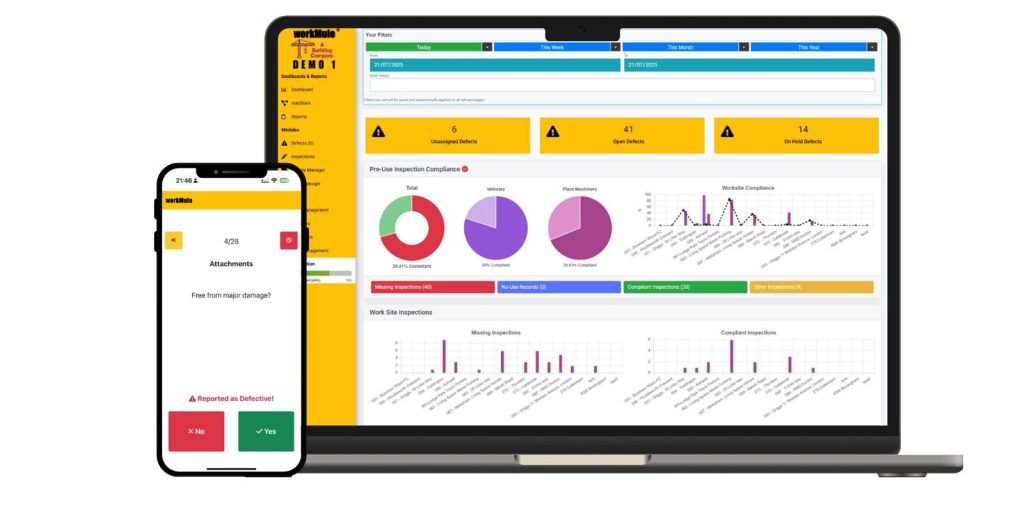
If a fault or safety concern is identified, it must be logged immediately. workMule’s real-time defect reporting ensures that:
- Maintenance teams are notified instantly
- Unsafe equipment is flagged before use
- All actions are tracked for compliance purposes
Immediate reporting reduces the risk of accidents and prevents equipment from being used until it’s safe, saving time and avoiding costly downtime. Teams can also analyse defect trends over time to inform preventative maintenance strategies, improving the lifespan of their assets.
Step 4: Review and Sign-Off
After the inspection, operators or supervisors review findings and sign off on the equipment. Digital workflows automatically record who performed the check, when it was completed, and any photos or notes added. This ensures accountability and builds a permanent audit trail.
By integrating pre-use inspections with plant inspections and other daily checks, construction teams can maintain a single source of truth for equipment safety. Managers can easily track compliance across multiple sites, providing peace of mind and ensuring regulatory standards are always met.
The Digital Advantage Over Paper Inspections
Switching to digital pre-use inspections provides several key benefits:
- No lost forms: Every inspection is securely stored and time-stamped.
- Standardised processes: Checklists are consistent across all operators and equipment types.
- Real-time data: Supervisors see results instantly and can act on defects immediately.
- Audit-ready records: Digital logs simplify compliance with LOLER, PUWER, and other safety regulations.
- Seamless integration: Works with existing software and systems for maintenance, reporting, and asset management.
Digital pre-use inspections also empower operators. By giving teams immediate visibility into equipment status, everyone becomes more proactive about safety. This approach fosters a stronger safety culture and ensures that potential hazards are addressed before they cause incidents.

Best Practices for Digital Pre-Use Inspections
- Train operators on why each check is important, not just how to complete it.
- Schedule inspections automatically for daily or weekly checks.
- Review data regularly to identify recurring faults or trends.
- Integrate defect reports with maintenance workflows for faster resolution.
- Use dashboards to track inspection completion rates and overdue checks.
Following these best practices ensures pre-use inspections are a proactive safety measure rather than a reactive compliance task. Companies that adopt this approach see measurable improvements in operational efficiency and workforce safety.
Conclusion: Make Pre-Use Inspections Effortless with workMule
Paper-based pre-use inspections are slow, error-prone, and easy to misplace. Digital inspections with workMule streamline compliance, keep teams accountable, and reduce downtime.
By embedding pre-use inspections into your daily operations, construction managers gain a safer, more efficient site where equipment is verified, traceable, and ready to perform.
👉 Book a demo today to see how workMule can digitise your pre-use inspections and simplify compliance across your fleet.